
A ridge wind at 20 miles per hour kills the Jetboil after seven minutes of sputtering, so we reach for the MSR PocketRocket 2 instead. The little burner lights instantly and boils a liter of water in 3.5 minutes because standalone canisters beat integrated systems when the gusts hit.
Kitchen roundups hype sealed systems for their one-button calm-air performance. We're arguing the opposite. On exposed trails where the wind rarely sleeps, canister tops with wide pot supports and regulator technology outperform the exchangers that choke in crosswinds.
What Jetboil speed actually buys
Integrated stoves flash impressive boil time trials when tested in still air conditions. Their heat exchanger shines during a two-person coffee stop with zero wind blowing through the site. Add the trail's typical reality, however, and the narrow burner design starts to choke on side gusts. The fuel canister nestles neatly inside the pot for better packability, but that fixed geometry also limits your pot choice and reduces wind shielding options.
Standalone canisters, by contrast, weigh half as much per liter of capacity while allowing the simmer control to live separate from the cooking pot itself. MSR's serrated arms grip any base diameter securely and block gusts far better than a tall exchanger collar ever could.
The premium price pays for proprietary fuel canisters and an auto-ignition system that fails when everything gets wet. It does not buy superior wind performance or lower base weight. The thousands of reviews across canister heads back this pattern every time.
MSR PocketRocket 2: 2.6oz boils anywhere
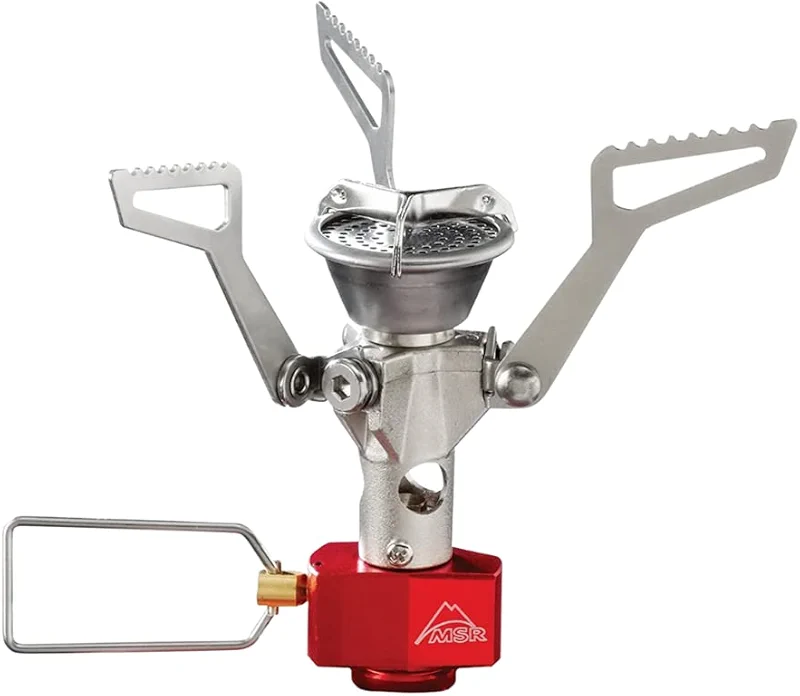
This folding burner weighs just 2.6 ounces and packs down to a tiny two-by-two-by-three-inch size for the trail. The serrated pot supports lock onto any vessel, from a titanium mug for solo use to a two-liter group pot for shared meals. There is no priming or preheating required; you simply screw on an isobutane canister and adjust from simmer to a rolling boil as needed.
It delivers three-and-a-half-minute liters even as the fuel canister runs low in the last days of a trip. The broad flame base shrugs off crosswinds where enclosed systems falter completely. Ultralight travelers pair it with a 750ml titanium pot to chase every gram in their base weight.
Skip it if your group cooking demands integrated volume for larger batches. In that case, you trade those two ounces of stove weight for pots that nest the fuel inside more conveniently.
MSR Deluxe: regulator holds cold boils
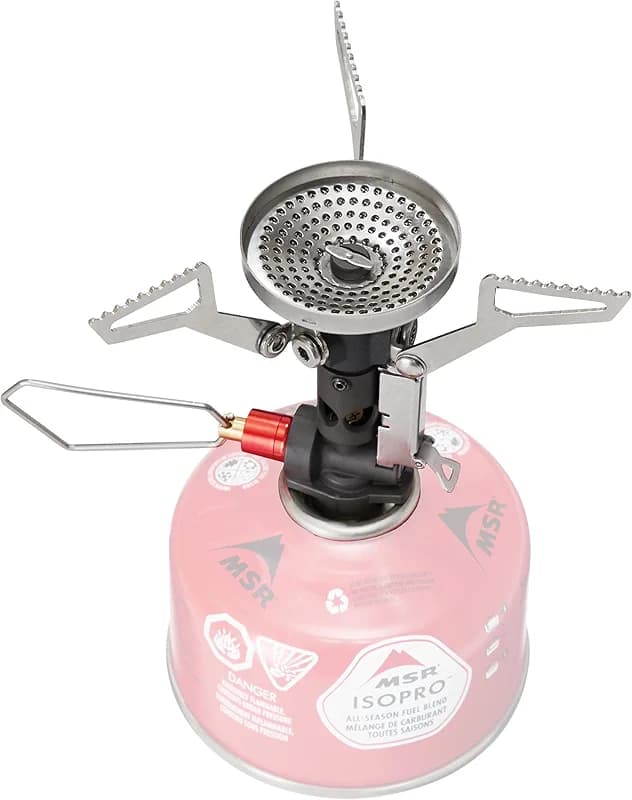
At 2.9 ounces, the Deluxe version adds a piezo spark igniter and pressure regulator to the lineup. Boil times stay flat and reliable from sea level up to fourteen thousand feet, whether the fuel sits low or full in the canister. The regulator feeds a steady flame across temperatures from thirty to ninety degrees Fahrenheit without faltering.
The piezo igniter fires reliably whether conditions stay wet or dry, eliminating the need for matches on every start. A stuff sack packs it down to an ultra-tiny size that slips into any pocket. Wind resistance improves over the base model because the regulated flame punches through gusts much harder.
It shines for shoulder-season starts where the mornings dip below freezing and fuel performance drops off. The built-in spark saves the weight of a separate striker, though flint loyalists might skip it for simplicity.
Fire-Maple Fixed Star: system weight compromise
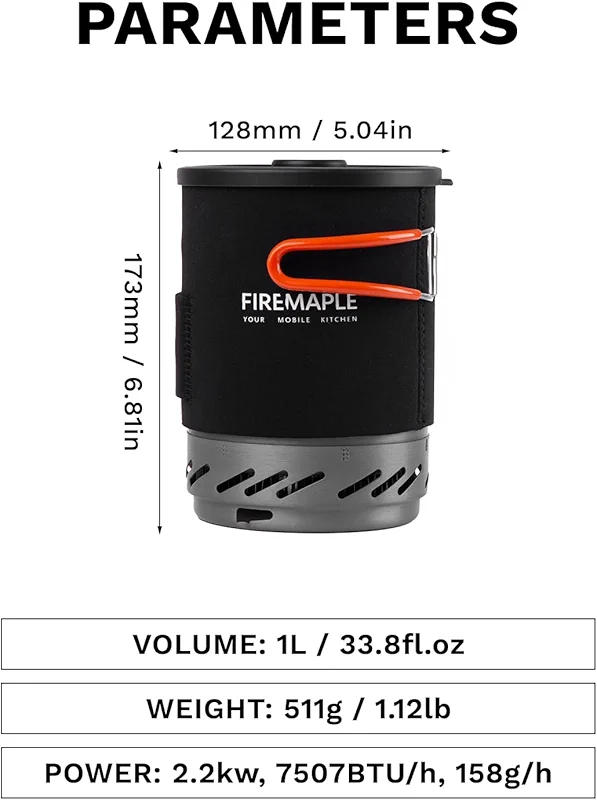
Fire-Maple "Fixed Star 1" Backpacking and Camping Stove System | Outdoor
$49.95on Amazon
The Fire-Maple Fixed Star packs the stove, a one-liter pot, and space for a canister into a total of eighteen ounces. Its heat exchanger cuts boil times by thirty percent in calm conditions, while the piezo lights instantly every time. The anodized aluminum pot comes with hard handles that lock securely for safe handling.
It bridges the gap between pure standalone lightness and integrated convenience without tying you to Jetboil's proprietary canisters. Wind performance needs an added screen for best results, but the exchanger still outperforms a raw open flame by less margin than the MSR's pot arms deliver.
This setup suits new backpackers who want nesting without the premium price lock-in. You trade some windproofing for compactness if your trips stay below treeline most days.
Pattern across canister stoves
These three picks share a grams-first design philosophy that prioritizes lightness over sealed bulk. The bare MSR weighs under three ounces on its own. Fire-Maple nests everything for around twelve ounces carried in total. A comparable Jetboil output hits twenty-plus ounces before you even add fuel.
Real wind exposes the gap between the two approaches every time. Exchangers clog easily on the sides during gusts. Open burners shield themselves with arms or a simple screen. Fuel flexibility lets you grab green-label canisters from any outfitter anywhere, while integrated systems demand specific threads that limit options.
Standalone always wins on thru-hikes where every gram counts and the gusts never fully quit. The cost per mile drops lower too, since these burners last seasons without replacement while paired with cheap universal fuel.
Pick the regulator for trails
Start with the MSR PocketRocket Deluxe. Its cold-weather hold and reliable spark cover most trail conditions without adding bulk to your kit. Add the Fire-Maple for nested day hikes where convenience edges out pure grams. Drop to the base model only if you chase the absolute lightest setup. Your ridge boils will stay right on schedule no matter the weather.